
TT Nature Bird Feeder Station: Two-minute review
Unlike companies like Netvue (which originated as a smart security camera maker before launching the Birdfy line) or Bird Buddy (which built its platform from the ground up around a custom app experience), TT Nature uses off-the-shelf camera hardware paired with third-party software.
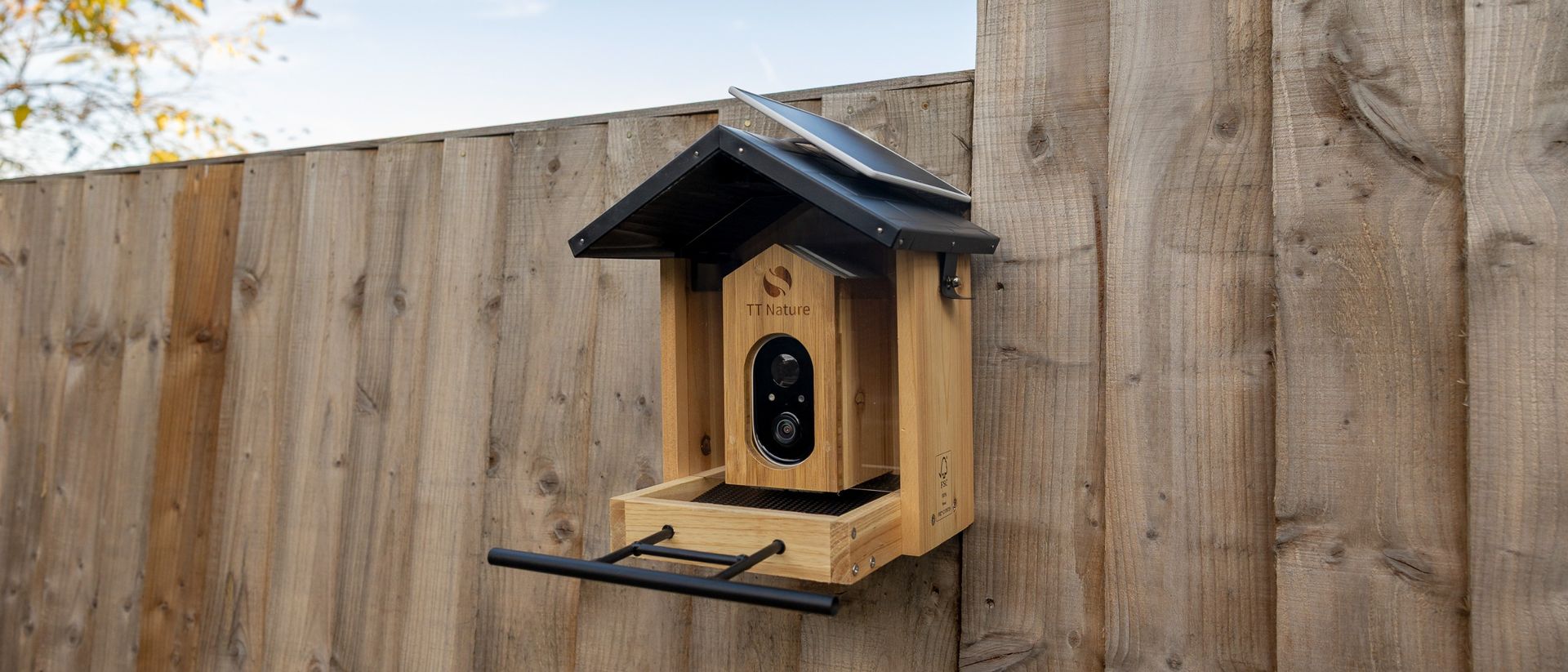
Its wooden Smart Bird Feeder Station is a rustic, budget-friendly alternative to the sleek, plastic-heavy smart feeders dominating the market. It’s solidly built from FSC-certified natural timber and topped with a dark metal roof, making it look more like a traditional garden birdhouse than smart home tech, and a natural fit for rustic outdoor setups. It also matches my garden office perfectly.
Beware, the camera is more like a retrofitted security device than a specialized bird snapper. After mounting the feeder to my garden fence and monitoring it for several weeks, I appreciate its physical design and reasonable cost, while also finding the basic software setup frustrating.
As mentioned, the wooden housing feels very sturdy, though it will inherently be harder to clean and maintain than all-plastic constructions. The included mounting template and accessories make locking it securely onto a fence panel or post easy, provided you have a decent drill. The external solar panel and full mounting kit are included, whereas most rivals require you to buy these as extras.
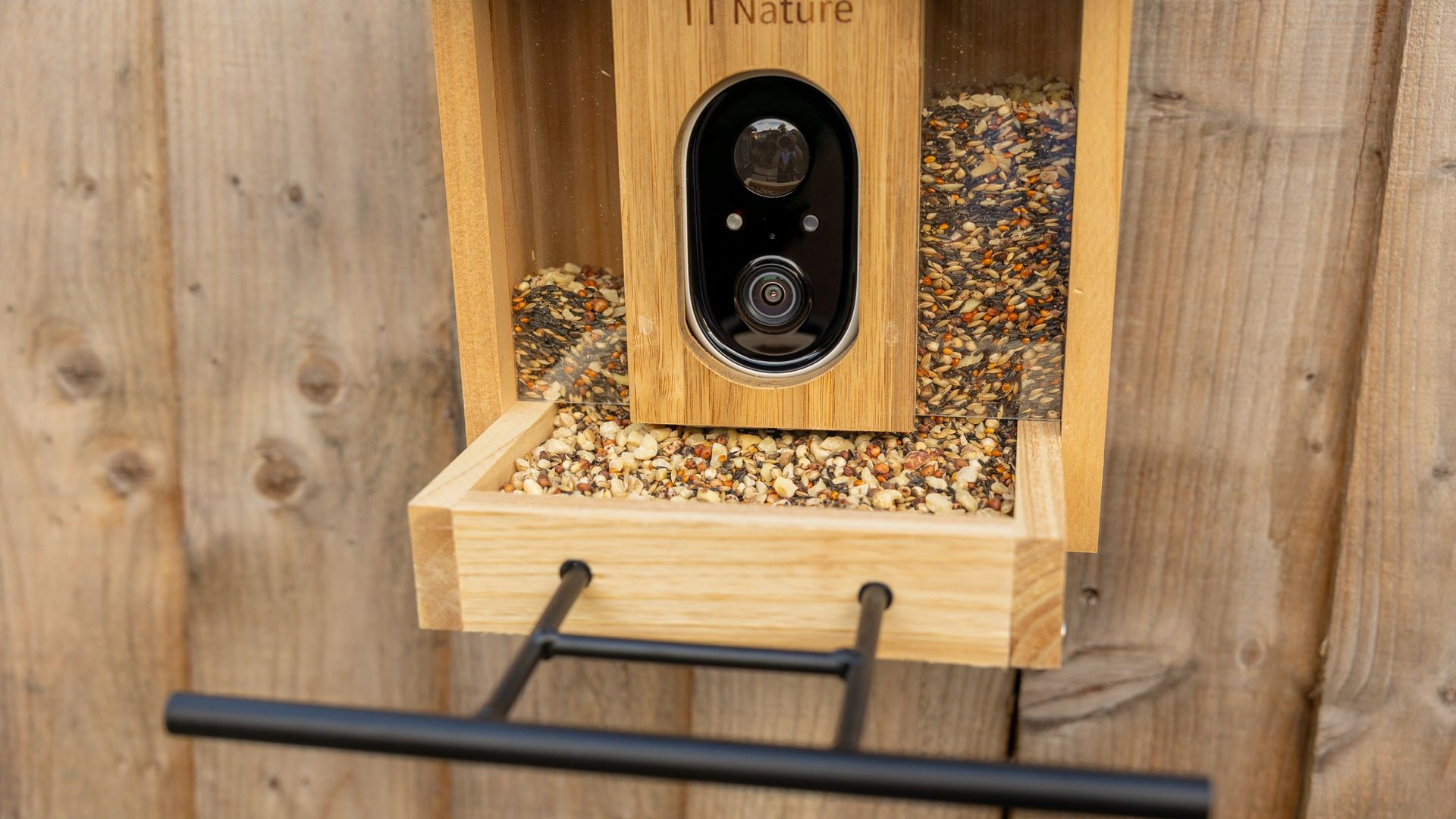
The physical assembly is minimal, but setting up the camera with TT Nature's accompanying app, PerchLens, proved to be less straightforward than the process with Birdfy models. The app refused to detect the camera automatically, forcing a manual setup that meant temporarily locking my home router to a 2.4GHz band — a hurdle I’ve never had to clear with other feeders I’ve tested. Once past that, though, the Wi-Fi connection has remained stable, even with the feeder at the far end of my garden.
The feeder captures 1080p HD video with a wide field of view and a pleasantly sharp focus on the perch itself. However, clips aren't detailed enough to see individual feathers. I found that the camera’s motion sensor is slow to trigger, so clips often start a fraction too late and catch the tail end of a visit or an empty perch. The camera lens also fogged up several times on damp mornings, muting contrast and visibility during the busiest dawn feeding hours.
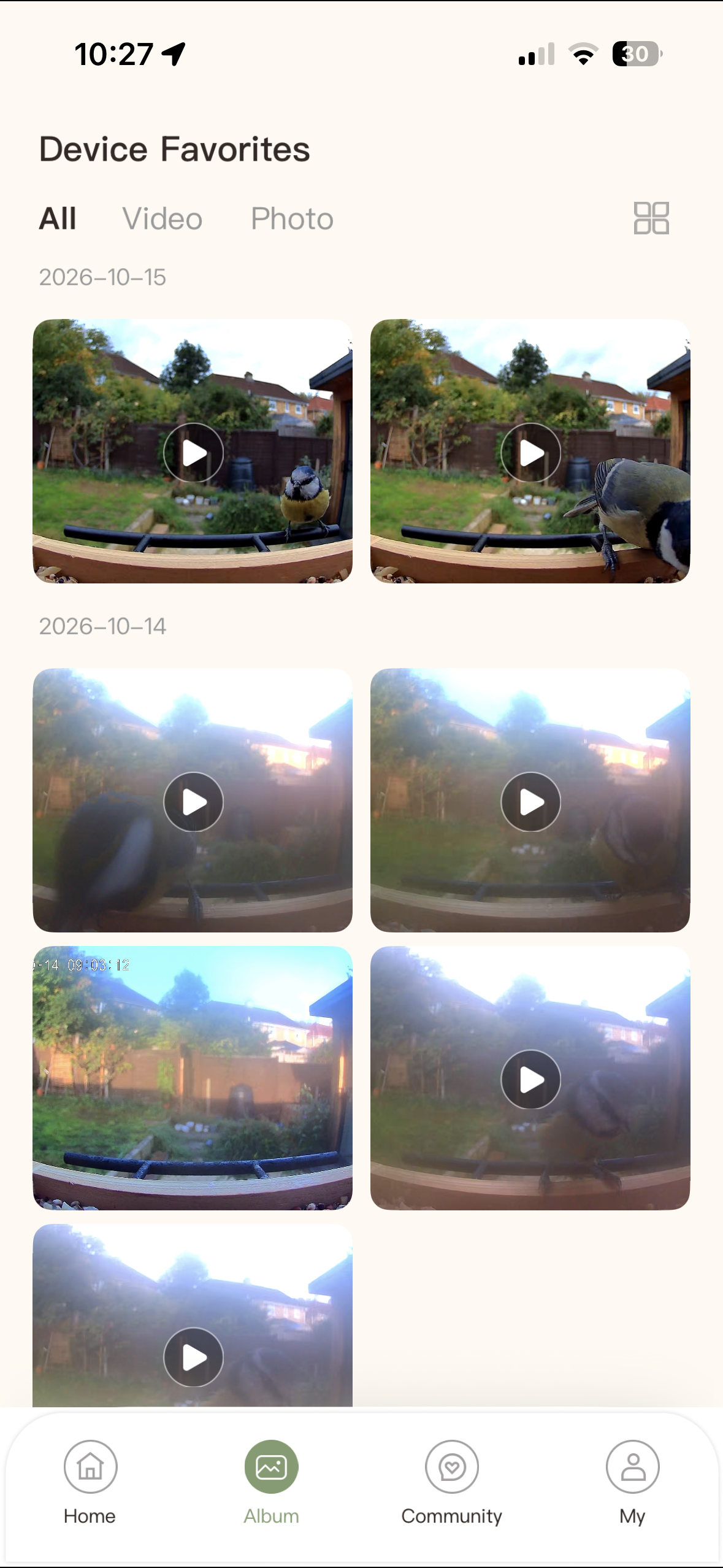
You can use microSD recording (cards up to 128GB are supported) and also get three-day cloud storage without a monthly fee. However, AI species identification is locked behind an optional monthly or annual subscription. Without it, incoming alerts are just listed as 'bird'. The software is far more rudimentary than the polished, gamified ecosystems of the Bird Buddy 2 or Birdfy. If you don't mind manually spotting your visitors, though, the app does at least neatly organize your clips by date and time.
Despite its basic app and trigger lag (something I hope will be less of an issue when the birds feel brave enough to spend longer feeding), the TT Nature delivers undeniable value. It offers a nice-to-look-at wooden build and set-and-forget solar power, at a fraction of the price of most flagship competitors. If you’re a casual bird lover who wants a budget-friendly garden camera that blends in naturally, I think it can still earn a spot in your yard or garden.
- Interested in other options available besides the TT Nature Bird Feeder Station? Check out our best bird feeder cameras guide.
I found live streaming to be occasionally laggy, sometimes not loading at all, and even when I set the camera to Frenzy Mode, the AI postcard capture missed birds I could clearly see sitting on the feeder from my kitchen window. It’s not the most reliable feeder I’ve used, and not ideal if you want to capture every single bird and build a picture of their visiting habits; however, it does stop your feed from getting clogged with thousands of similar clips.
Despite these niggles and quirks, I really enjoy the core experience. The AI bird identification is almost perfect, the postcard collection system provides a handy highlight reel, and the solar roof means near-continuous use.
The Bird Buddy 2 is a sleek, low-maintenance smart feeder with strong app design and best-in-class solar performance. For now, it earns its spot in my garden (and believe me, I have four smart feeders on the go), though I can’t help thinking about its price and hope tighter bird detection lands in future updates.
TT Nature Smart Bird Feeder: Price and availability
- First created and released around mid-2024
- Available via Amazon US, Walmart, and Amazon UK
- $120-140 in US (approx. £75 in UK)
At around $140 (£75), the TT Nature smart bird feeder station sits at the affordable end of the best bird cameras, especially given its solid timber construction. It sits well below Netvue’s premium wooden options like the Birdfy Bamboo (~£199) and costs about the same as the plastic entry-level Birdfy Rookie (~£80), which doesn’t include a solar panel.
The feeder includes free AI species identification, and I like that it has a local MicroSD card slot (supporting up to 128GB) for storage, plus a free 3-day rolling cloud buffer. Not hugely generous, but enough for a freebie. Unlike rivals that lock some features under a premium membership, you don’t have to budget for recurring monthly fees here.
Availability is primarily via Amazon in both the US and UK, or directly from TT Nature in the US. The package includes the wooden feeder housing, 1080p camera module, mounting hardware, and an external 3W solar panel. Considering the full package, I think TT Nature delivers good upfront value for birdwatchers who want a complete, low-maintenance setup on a sensible budget.
Software is as important as hardware, though. I found its accompanying app lags behind Birdfy and Bird Buddy in terms of enjoyment and features, and I’d still consider paying a bit more for them.
TT Nature Smart Bird Feeder camera: Specs
Feature | Specification |
|---|---|
Sensor | 1/2.7" CMOS |
Photo quality | 12MP - 1080p snapshot capture with 130-degree FOV |
Video quality | 1080p HD @ 30fps |
Memory | MicroSD slot (up to 128GB) + Cloud storage options |
Dimensions | 185 x 198 x 270 mm (7.3 x 7.8 x 10.6") |
Weight | 0.95 kg (2.1 lbs) |
Seed capacity | 1.5 Litres (~6.3 Cups) |
Weather resistance | IP65 Certified |
Battery | 5200 mAh rechargeable battery with an external 3W Solar Panel included |
Connectivity | 2.4 GHz Wi-Fi |
TT Nature Smart Bird Feeder camera: Design
- Rustic wooden build with a black metal roof
- Mounting kit included for trees, walls, or poles
- Separate wired solar panel for charging
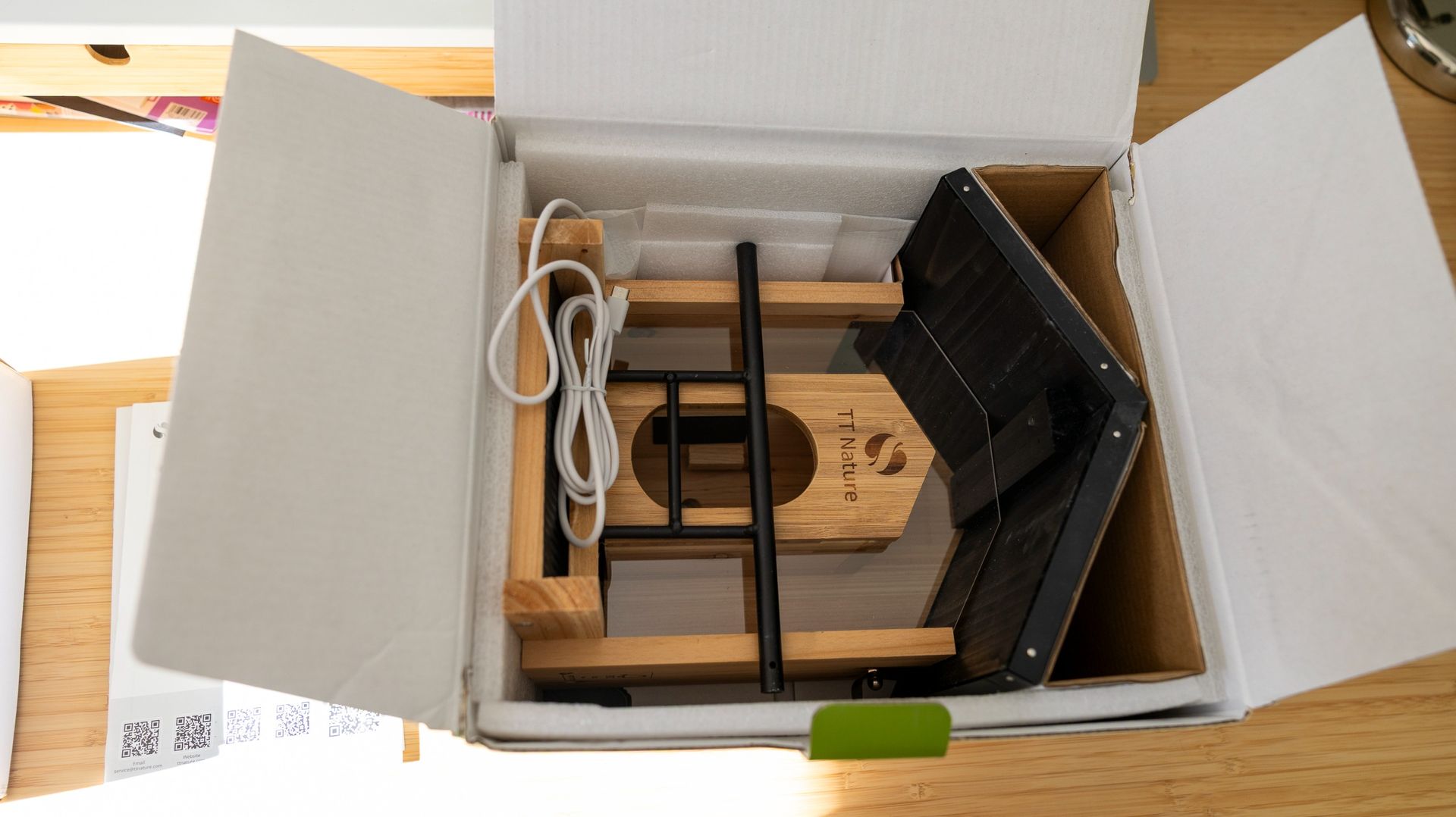
The TT Nature feeder, made from FSC-certified natural timber housing, immediately sets the kind of traditional, garden-friendly tone that I like over a plastic model. On its website, the brand sells two roof options, but the dark metal roof on my version feels sturdy and well-built. The packaging is neat and secure, though I found it a shame that TT Nature uses single-use plastic wrapping for some elements instead of easily recyclable cardboard—a missed opportunity for a nature-friendly product.
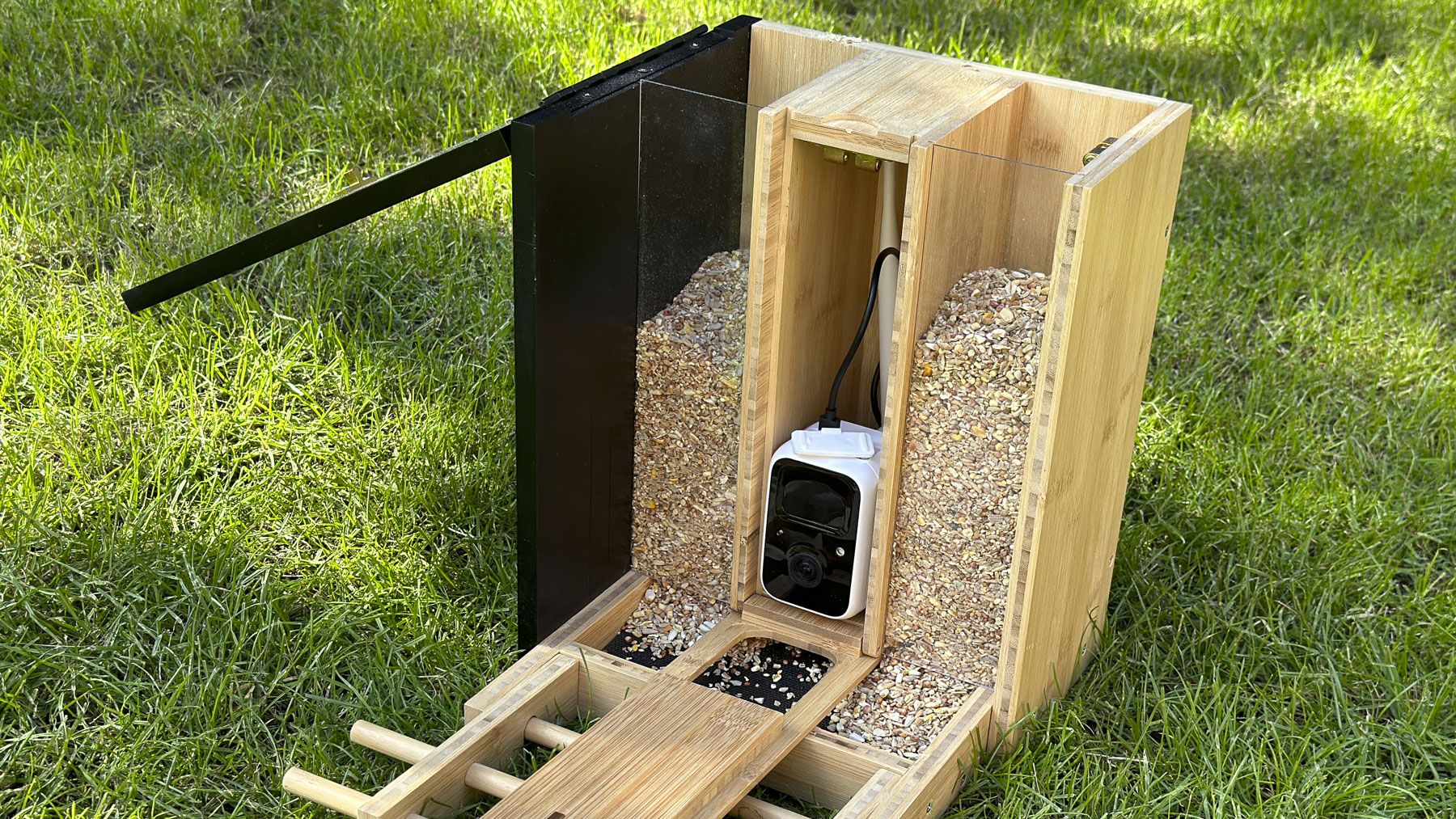
Assembly takes less than ten minutes and is intuitive enough that you likely won't need the instruction manual. You simply pop the perching ledge onto the front, lift the hinged wooden flap to slide in the camera module, and tilt up the roof to pour in your seed mix.
Initially, the physical assembly took about ten minutes. There are clear instructions included in the box, but I didn't find I needed them because it was all intuitive. You slot the metal perching ledge into pre-drilled holes at the end of the wooden feeding area, pull down the branded wooden flap at the front to slot the camera module in, and tilt up the roof when you want to add seed. The camera sits loosely in its designated space rather than clipping or mounting in, which is surprisingly secure even if it feels a little unanchored at first.
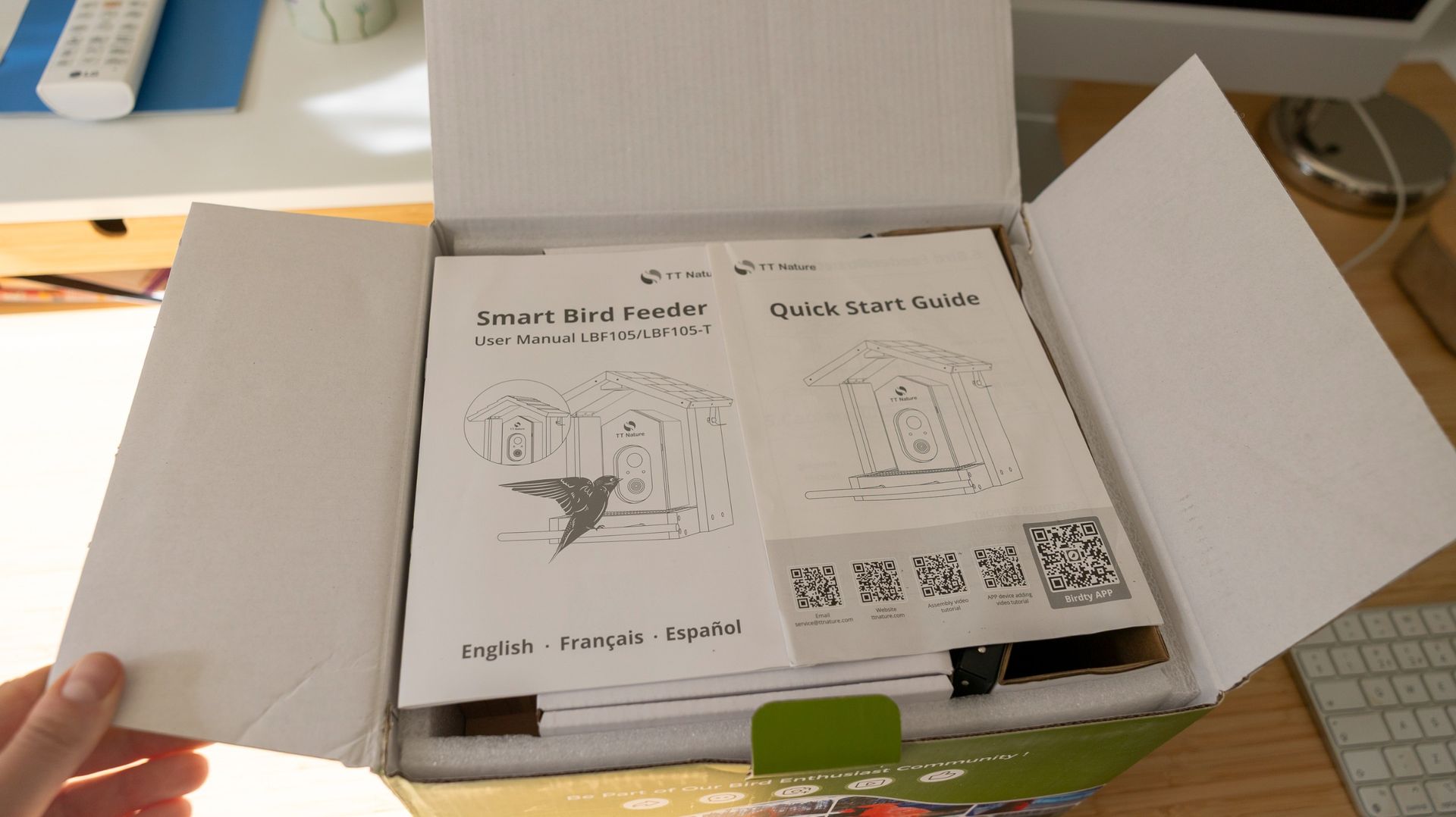
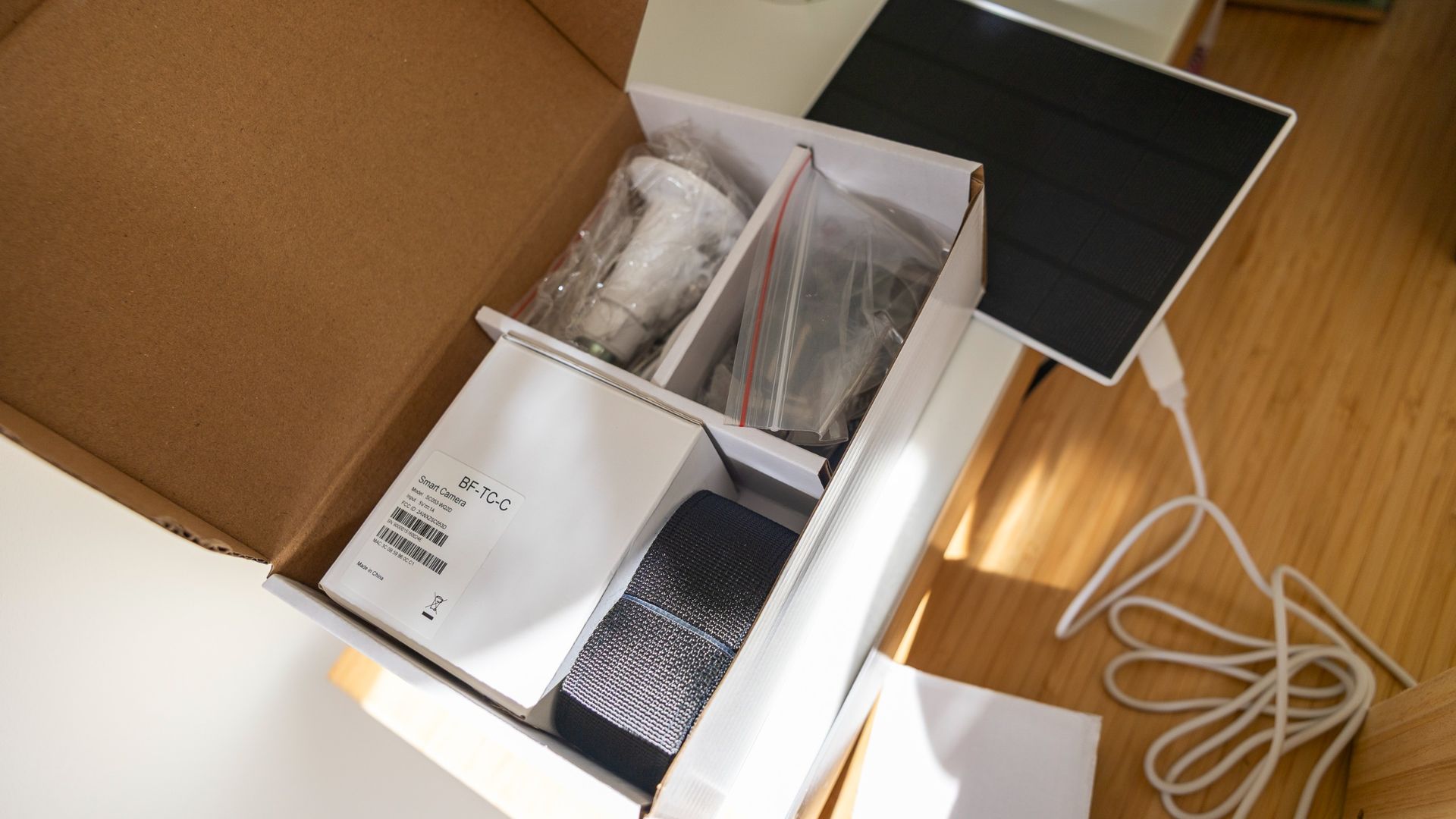
Though putting together the wooden unit was easy, I struggled for a while to get the camera to pair with TT Nature's accompanying app over Wi-Fi. It took me about an hour of troubleshooting to get the camera connected, as it wouldn’t find the camera automatically during scanning and I had to switch over to manual setup.
Even then, I had to temporarily set my Virgin Media home router to broadcast on a 2.4GHz network only—a step I’ve never had to take with any of the other smart feeders I’ve tested. Luckily, now that the initial connection has been established, I‘ve been able to switch my router back to a dual 2.4GHz/5GHz band without any ongoing drops.
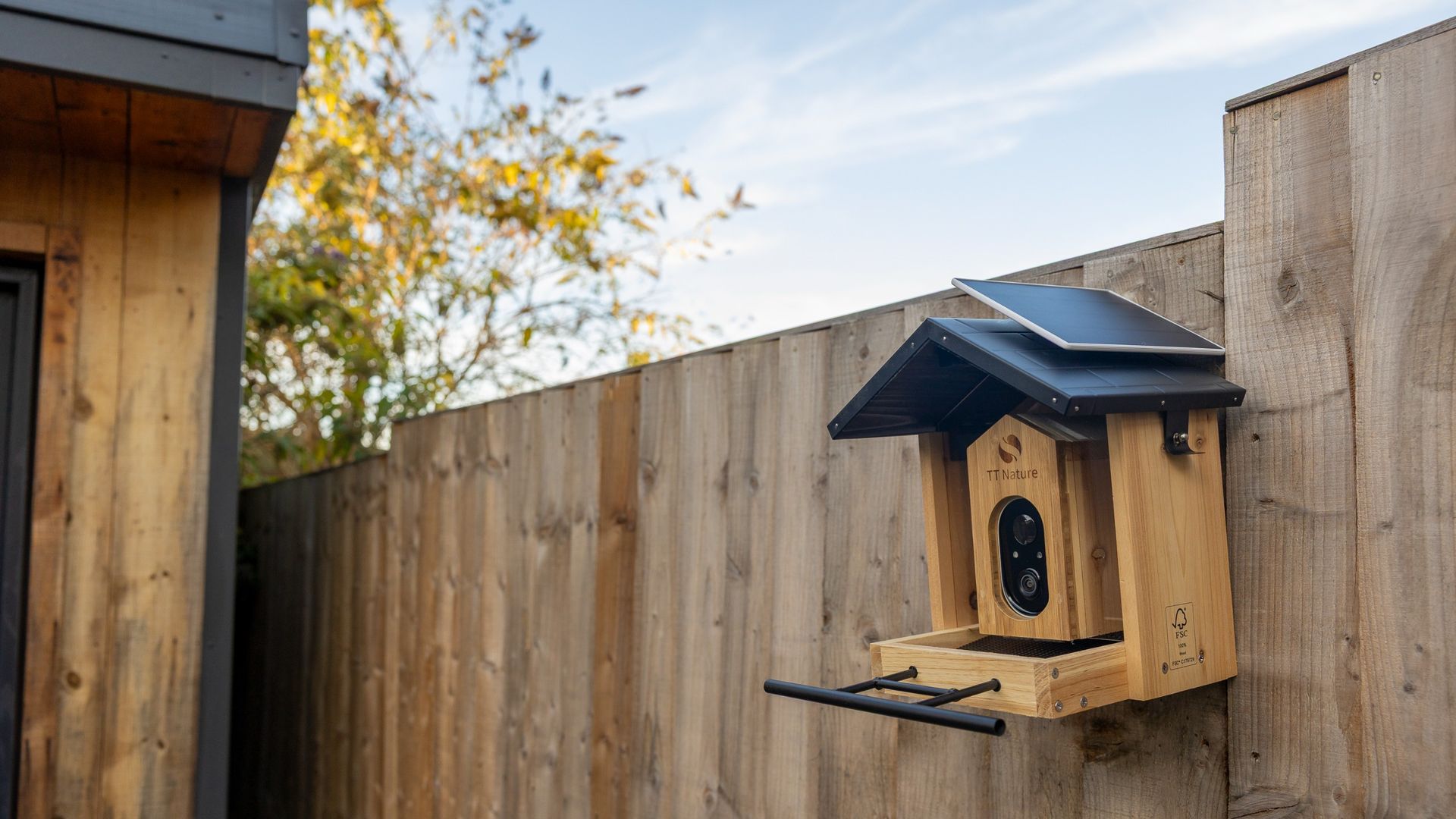
Even with some premium smart feeders, wall or fence mounting brackets are sold as extra accessories. The TT Nature feeder has mounting options for trees, poles, walls, and fences included, and I opted to mount the feeder directly onto my garden fence panel with the supplied screws.
Once these were drilled in—made much easier thanks to an included mounting template—the feeder sat firmly on its plate with no wobbling. I do appreciate the sturdy, locked-in feel this gives you, but note that it’s far less flexible to reposition the feeder on a whim when compared to hanging designs like the Bird Buddy 2.
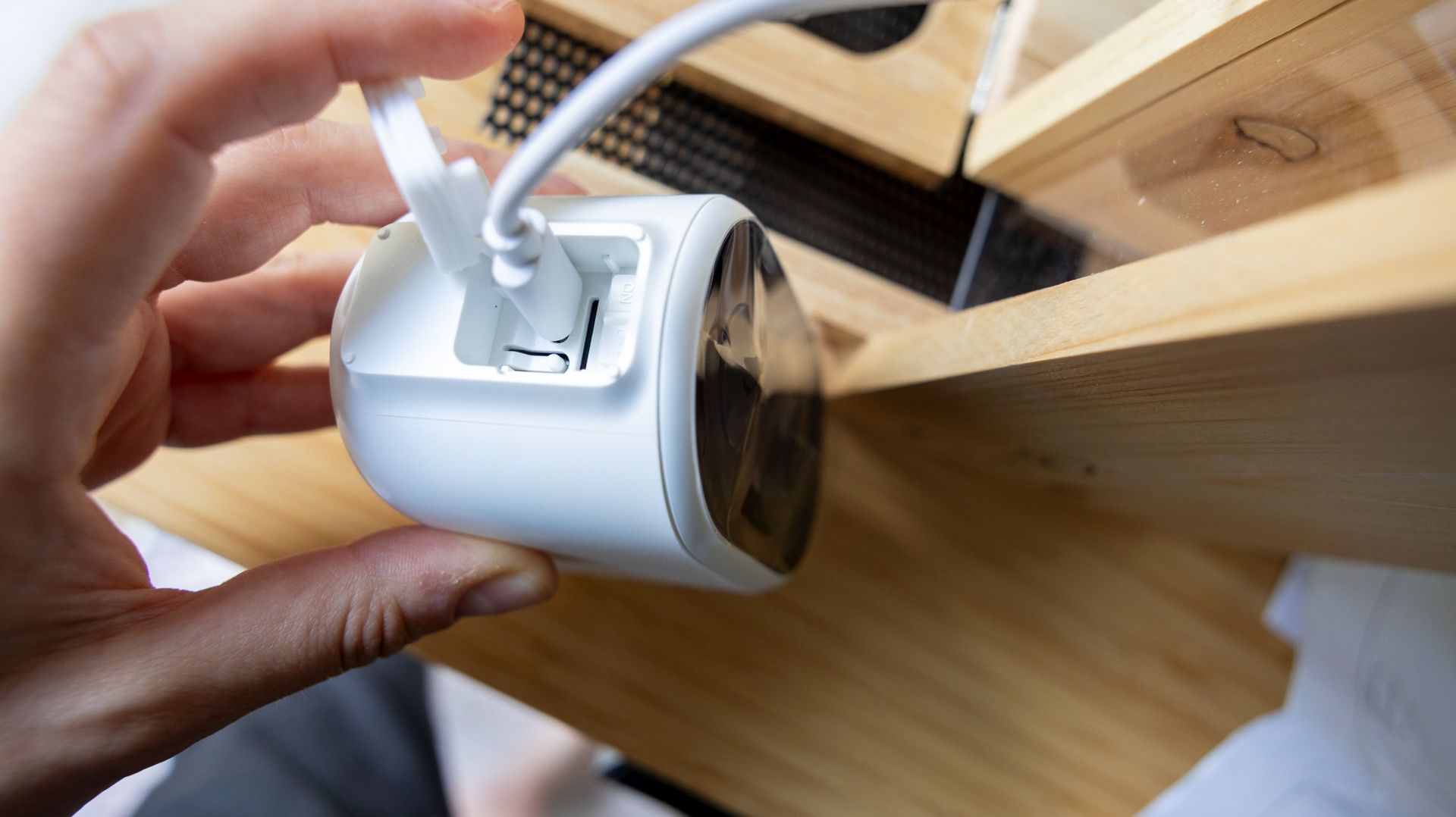
I found out (the fiddly way) that it’s better to mount the wooden feeder to your fence or post first, pair the camera to your phone app second, and then slide the camera module into its front slot. You’ll also need to thread the solar panel cable through a small access hole in the back of the wooden housing to connect it to the camera.
The solar panel can be mounted separately nearby, but to save drilling extra holes into my garden fence, for now I’ve chosen to rest it directly on top of the feeder’s metal roof for easy adjusting. The white trailing wires from the panel aren't the prettiest to look at, and I prefer a feeder with flush solar panels integrated directly into the roof design, but you can easily tuck the excess cable behind the wooden housing to tidy things up.
Filling the 1.5-litre hopper is quick and easy, though I found seed doesn't always flow freely down to the perch and needs some encouragement—either a nudge with your fingers or a gentle shake of the housing. There are drainage holes built into the feeding perch to allow water drainage, but these are wide enough to let smaller seeds fall straight through to the ground, which feels wasteful when you’ve bought premium bird food mix.
TT Nature Smart Bird Feeder camera: Performance
- Clear 1080p video in dry conditions and direct sun
- Consistent motion detection but a recording lag
- The app is functional, with AI species ID paywalled
It took only a few days for the local birds to grow bold enough to land on the TT Nature feeder in my garden, and soon after, my phone started pinging with initial motion alerts. Whenever I’m first testing out a new bird cameras, I also like to do a bit of an observation check out of my kitchen window to see how real-time landings translates to app notifications. More advanced software can take a few days to calibrate, but the motion sensors triggered reliably for almost every visitor I spotted.
That said, playing the clips back revealed a particularly frustrating flaw: the camera often triggers a fraction of a second too slowly. For particularly short visits, by the time the recording had started, the bird had often already flown off. Videos are capped at a fixed 20-second duration with no option in the app to adjust clip length. By default, the motion sensitivity is set to Medium (the other options being low or high); I bumped this up to High in the hope of catching birds as they first approached, but it didn’t make a noticeable difference to the trigger lag.
The camera settings are rudimentary overall, though Iappreciate that you can filter notifications to alert you to animal visitors only. This stopped my phone from pinging me every time I took out some washing or my dog sniffed past. Of course, you can leave it set to all motion if you want—at its core, this is essentially a standard security camera housed inside a wooden birdhouse.
In terms of video quality, the camera definitely needs even lighting and a dry day to perform at its best, a slight drawback when your feeder is at its busiest during the early hours. On several damp autumn mornings, the glass lens completely fogged up with condensation, making visiting birds look like blurs. There’s also no automatic white balance or HDR tone-mapping at play (I don’t know how exposure works on other cameras, but the Bird Buddy has often seemed to compensate); birds sitting in deep morning shade can also look quite dark and hard to make out.
When the weather is fair, however, the optical performance is more charming. The lens offers a crisp, fixed focal plane right on the front perch, paired with a natural, shallow depth of field that softens the garden background nicely. I also like how wide the field of view is, allowing you to watch where birds fly in from and trace their exit paths after a feed. Video playback is generally clear, if occasionally a bit juddery during fast wing-flaps.
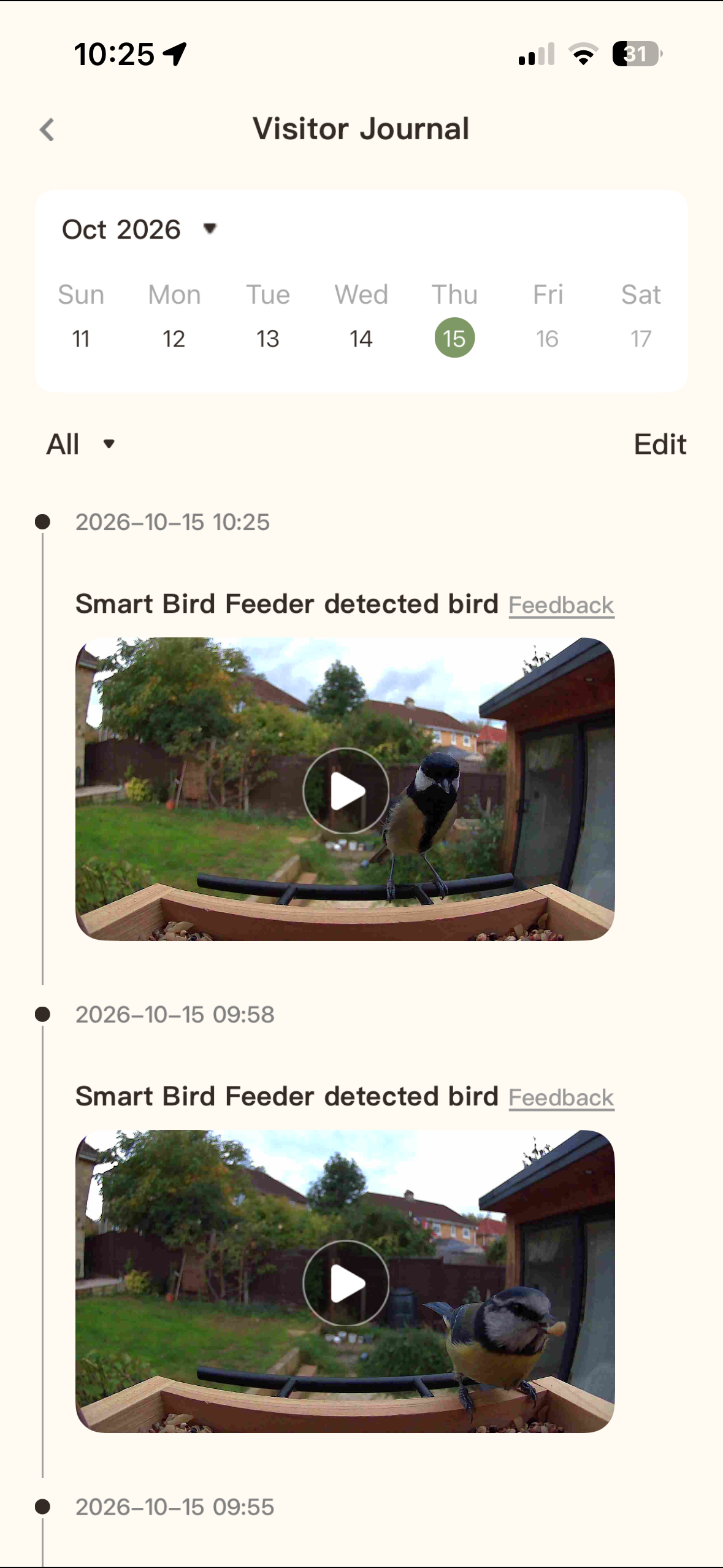
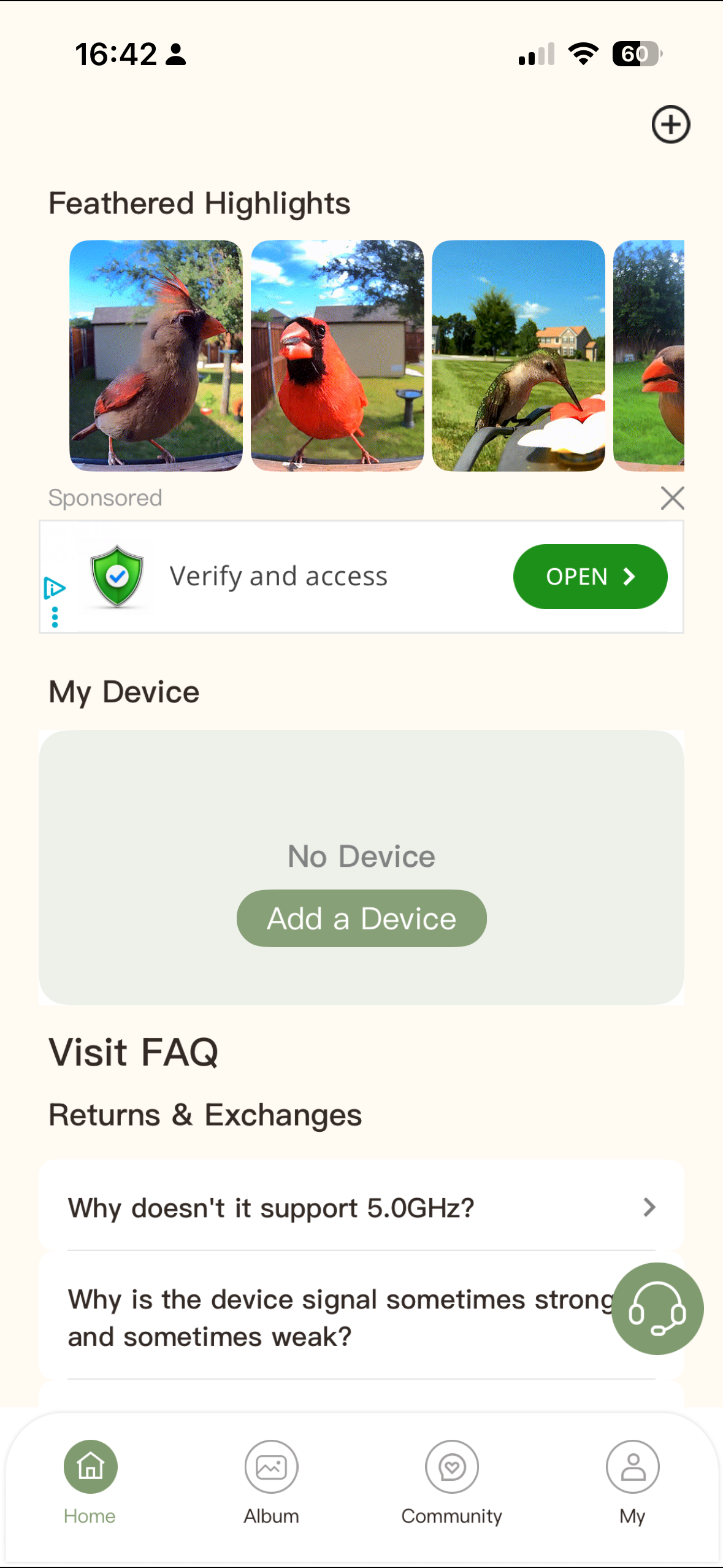
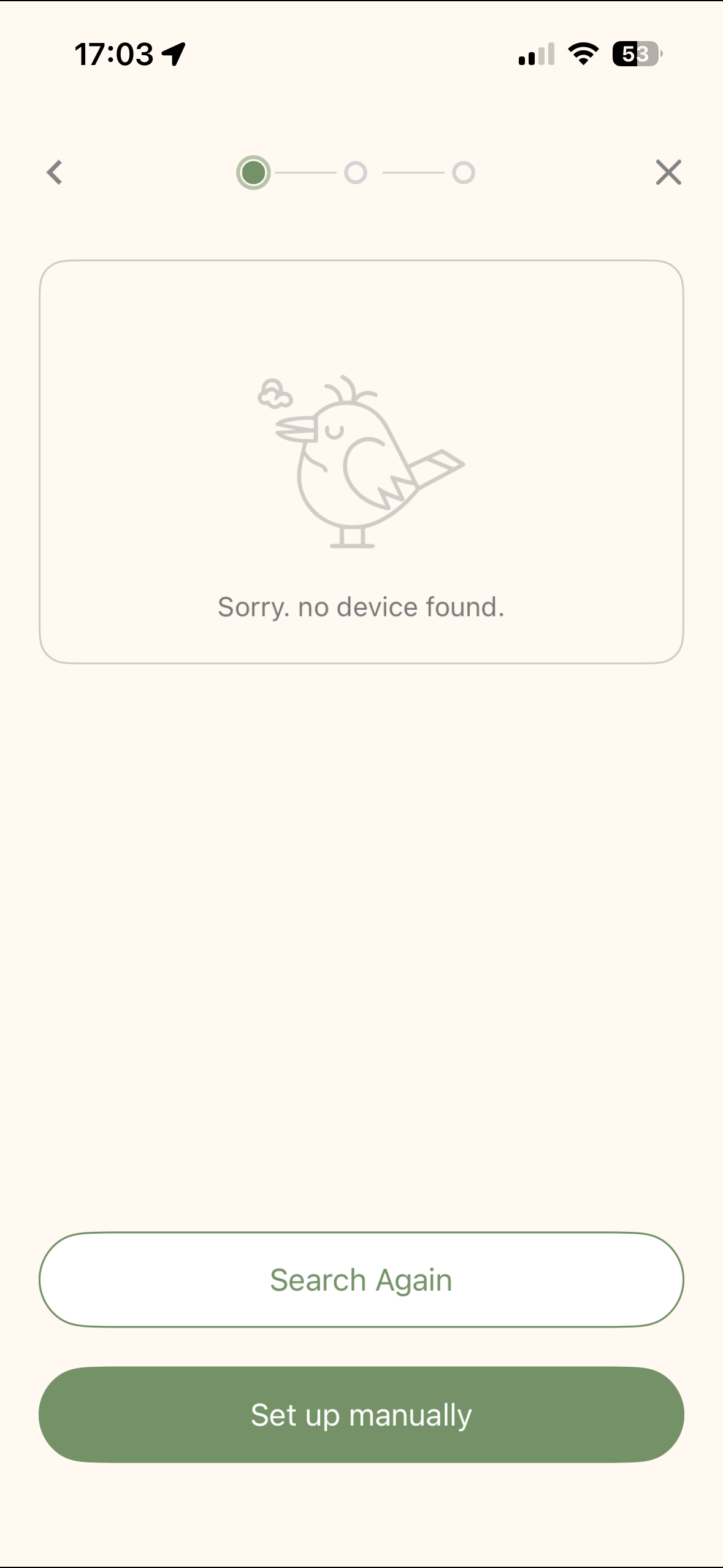
The accompanying PerchLens app is where the TT Nature camera feels most in tune with its entry-level price. Unlike the slick, fun ecosystems of Birdfy or Bird Buddy—which feature near-flawless AI identification out of the box—the software experience here is basic.
Without paying for an optional monthly subscription (£6.10/month, processed painstakingly via PayPal or bank transfer), you don't get any automatic AI species tagging, and incoming sightings are simply labelled as "bird".
TT Nature doesn't push the camera as a heavy AI play, and personally, I don't mind manually spotting the birds coming and going since I recognise common local garden species anyway. But I think if your goal is to automatically curate a digital log, track species frequency and behaviour, or build up a solid collection of identified visitors, the app simply isn’t advanced enough for that. The camera also doesn't automatically generate shareable photo cards like the Bird Buddy 2, and if you want stills, your best bet is capturing a manual screenshot while watching the 1080p live stream.
Should you buy the TT Nature Smart Bird Feeder camera?
Buy it if...
You want a natural-looking design
Constructed from FSC-certified natural timber with a weather-resistant metal roof, the wooden TT Nature looks like a traditional garden birdhouse rather than a plastic security cam. It blended well into my garden, though mounting the solar panel is extra faff.
You want a no-subscription storage option
The TT Nature includes a physical MicroSD card slot (up to 128GB) and a free 3-day cloud loop, meaning you can save and download 1080p footage (if you're quick) without recurring costs.
Don't buy it if...
You want a large-capacity seed tray
With a 1.5-litre capacity, I'd say this feeder is on the smaller side for big or busy gardens. If you have high bird traffic or frequent squirrel visits, you might have to refill the seed tray every few days compared to larger 3L+ feeders.
You want an all-in-one solar roof
The camera's 3W solar panel is connected via a wire rather than being a seamless, flush panel built into the roof. If you want a clean, single-piece feeder, this setup feels a bit more modular and requires extra consideration.
Also consider

Bird Buddy Pro (with solar roof)
If you don't want to maintain the TT Nature's wooden exterior and prefer an easier-to-clean, modern design, the Bird Buddy Pro is a premium alternative. Its solar roof is integrated, and the companion app curates daily Postcard highlight reels instead of sending constant motion alerts.
Read our Bird Buddy Pro reviewView Deal
Birdfy Bamboo
If you like the naturalistic look of the TT Nature wooden camera but want something a little bigger, Netvue's Birdfy Bamboo gives you almost double the seed capacity. It's sustainably made and looks just as integrated in a traditional garden setting. The product is more expensive, but it offers better build quality.
Read our Netvue Birdfy Bamboo reviewView Deal
How I tested the TT Nature Smart Bird Feeder camera
- Tested for several weeks in a UK garden in October
- Mounted using the included hanging hardware
- Connected to an iPhone 15 Pro running the PerchLens app
I tested the TT Nature Bird Feeder Station in my garden for two weeks, after mounting it securely onto my fence using the metal plate and screws included in the box. I powered up the camera using the wired external 3W solar panel balanced on the feeder's roof.
I connected the camera to my iPhone 15 Pro via TT Nature's app, PerchLens, so I could see how effective the Wi-Fi pairing process and motion alert notifications were. I spent time navigating the app and reading the FAQs to see what the camera's support and community were like.
I mostly followed RSPB guidance on feeding birds and left small amounts of mealworms in the base of the feeder, adding a few seeds close to the end of October. I took the camera inside once during the testing period to refill it and wipe it down, as I wanted to gauge how easy it would be to clean.
First reviewed October 2026


